
Every World Cup brings a whole new story, stars, and sometimes fresh rules to the table. World Cup 2026 is no exception.
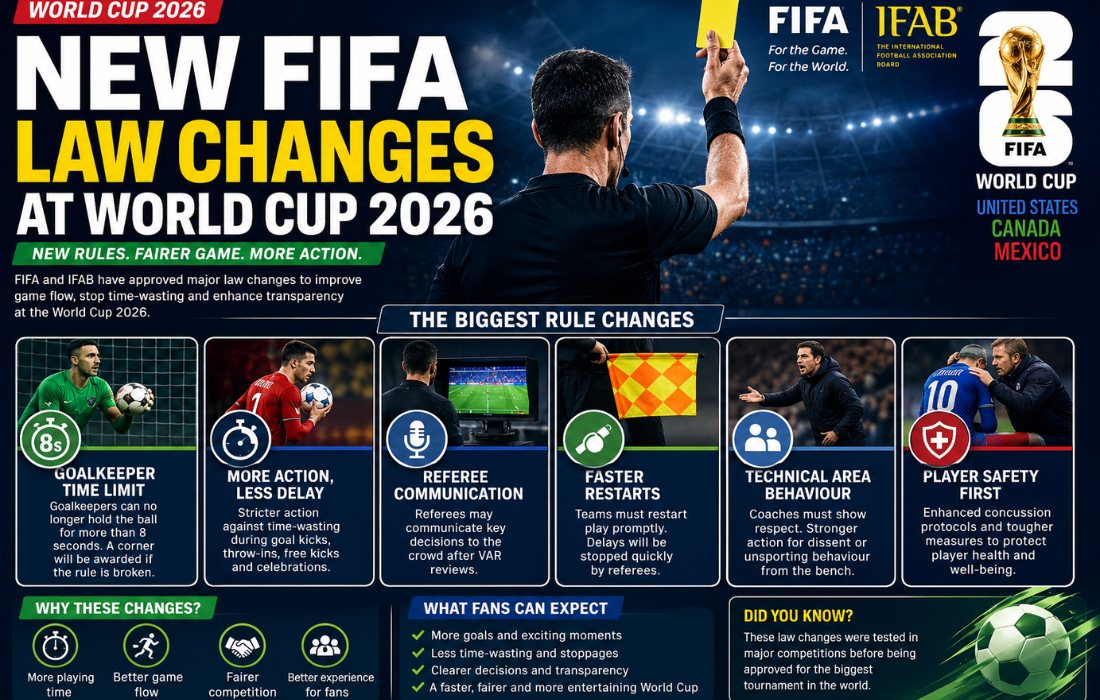
As the big tournament gets closer in the United States, Canada and Mexico, FIFA and the International Football Association Board (IFAB) have given the green light to a host of changes to the game that are aimed at making the game flow better, cutting down on time-wasting, being more transparent and giving everyone a better viewing experience.
Some may see these changes as small at first glance but, in reality, they could end up significantly affecting how matches are played and refereed at the biggest tournament in football.
Whether you’re a casual fan or a die-hard football follower, getting to know these rule changes will help you get the best out of every decision made on the pitch throughout World Cup 2026.
What New FIFA Rules Will Be Used at World Cup 2026?
The most significant changes focus on:
- Goalkeepers taking too long to release the ball
- Match tempo and restarts
- The way referees communicate with each other
- Things like dissent and arguing in the technical area
- Making sure referees make decisions in a more consistent way
- Measures to better protect players while they’re on the pitch
Just about all of these changes came about after a lot of testing in domestic and international games before they were cleared for global use.
FIFA is basically saying that the main aim is to keep the ball in play for longer and avoid all those unnecessary interruptions.
Why FIFA and IFAB Introduced New Football Laws
Football has evolved dramatically over the past decade.
Modern analytics show that supporters prefer matches with:
- More active playing time
- Fewer delays
- Faster restarts
- Greater referee transparency
- More consistent decisions
And at the same time, coaches have become super smart about management on the pitch, which sometimes involves using delays and other tricks to get an advantage.
The new rules aim to keep the game fair while being fair to all teams.
ForWorld Cup 2026, FIFA wants matches to be decided by football rather than by excessive time management tactics.
The Biggest Rule Changes Fans Will Notice
Several updates are expected to have an immediate impact on matches.
Goalkeepers Can No Longer Hold the Ball Too Long
One of the most talked-about changes involves goalkeeper possession.
Previously, referees rarely enforced the six-second rule despite it existing in the Laws of the Game for many years.
Under the updated approach, goalkeepers who hold the ball excessively may face immediate sanctions.
This change is designed to reduce deliberate delays and speed up transitions between phases of play.
New Measures Against Time-Wasting
Time-wasting has become one of football’s most debated issues.
Players often delay:
- Goal kicks
- Throw-ins
- Free kicks
- Substitutions
- Restarts
World Cup officials have been instructed to take a stricter approach toward unnecessary delays.
The objective is to ensure more effective playing time and reduce frustration for supporters.
Changes to Referee Communication
Recent tournaments have shown growing support for greater transparency.
Fans increasingly want to understand why decisions are made, especially after VAR reviews.
FIFA continues exploring improved communication methods that help spectators understand key decisions without disrupting the flow of the match.
This could become particularly important during controversial incidents in knockout-stage matches.
Updated Procedures for Restarts
Faster restarts are expected to receive greater emphasis.
Referees will encourage teams to resume play promptly and may intervene more quickly when players attempt to slow the game unnecessarily.
The result should be a more dynamic and entertaining tournament.
How the New Rules Affect Goalkeepers?
Goalkeepers may be the players most directly affected by the latest law changes.
The Goalkeeper Possession Rule Explained
For years, the six-second rule technically existed but was rarely enforced.
The updated approach gives referees greater confidence to act when goalkeepers deliberately delay restarts.
The intention is not to punish goalkeepers unfairly but to prevent repeated abuse of possession time.
What Happens if a Goalkeeper Breaks the Rule?
Depending on the specific circumstances and competition instructions, referees can penalize excessive delays through disciplinary measures or restart decisions.
The exact application will be communicated to officials before the tournament begins.
For goalkeepers, the message is clear:
Restart play promptly.
How the Rule Changes Affect Outfield Players?
The new laws are not focused exclusively on goalkeepers.
Outfield players will also need to adapt.
Faster Restarts and Game Flow
Teams that rely heavily on slowing matches may find it more difficult to manage game tempo.
Referees are expected to take a firmer stance on:
- Delayed throw-ins
- Delayed free kicks
- Deliberate interference
- Tactical disruptions
This should create a faster and more continuous style of football.
Changes in Tactical Time Management
Many experienced teams use match management as part of their tactical strategy.
The stricter enforcement of time-wasting rules means coaches may need to rethink certain approaches, particularly when protecting narrow leads late in matches.
How Will Referees Apply the New Laws?
Referee consistency remains one of FIFA’s highest priorities.
What FIFA Officials Have Been Told
Before every World Cup, match officials undergo extensive preparation.
This includes:
- Fitness assessments
- VAR training
- Video analysis
- Law interpretation workshops
- Tournament-specific guidance
For World Cup 2026, referees will receive detailed instructions regarding the implementation of the updated laws.
Consistency Across the Tournament
One of FIFA’s goals is ensuring that similar incidents receive similar decisions regardless of the referee or match.
Consistency improves credibility and reduces controversy.
This is particularly important during knockout rounds, where single decisions can determine a team’s fate.
Which New Rule Could Have the Biggest Impact at World Cup 2026?
Among all recent changes, the stricter approach toward goalkeeper possession and time-wasting appears most likely to influence matches.
Why?
Because it affects every team.
Whether defending a lead or chasing a result, all nations must adapt to a faster game environment.
Even small increases in effective playing time can create more attacking opportunities and potentially more goals.
For fans, this could result in a more entertaining tournament.
How These Rules Compare With Previous World Cups?
Football’s Laws of the Game are constantly evolving.
Previous World Cups introduced innovations such as:
- Goal-line technology
- VAR
- Semi-automated offside technology
- Expanded stoppage time calculations
World Cup 2026 continues this trend by focusing on match flow and fairness.
Rather than introducing dramatic new technologies, FIFA’s latest adjustments seek to improve how existing laws are applied.
What Coaches and Players Are Saying About the Changes?
Many players support efforts to reduce time-wasting because they want more opportunities to play.
Attacking teams generally benefit from faster restarts and increased active playing time.
Some coaches, however, have expressed concerns about maintaining consistency across different referees and competitions.
As with any law change, adaptation will take time.
By the start of World Cup 2026, most teams are expected to be familiar with the new expectations.
Will the New FIFA Laws Improve Football?
That is ultimately the question FIFA hopes to answer.
Supporters want:
- More action
- More goals
- More transparency
- Less time-wasting
The updated laws are designed to address all four areas.
If implemented consistently, they could contribute to a more enjoyable tournament for players, coaches, broadcasters, and fans.
Frequently Asked Questions
Referees are going to be cracking down on goalkeepers who hang onto the ball for far too long and then take their sweet time getting on with things.
The new rules are being rolled out across FIFA events, and it’s the plan for them to be in effect by the time the World Cup 2026 comes around.
VAR is staying in the game, but FIFA is still trying to figure out ways to give fans better insight into the decisions being made.
It’s generally the case that changes to the rules that are approved by IFAB end up being part of the official rules that apply everywhere.
The stricter handling of goalkeepers who hold onto the ball and then take ages to kick off again is the one that’s got people talking the most right now.