
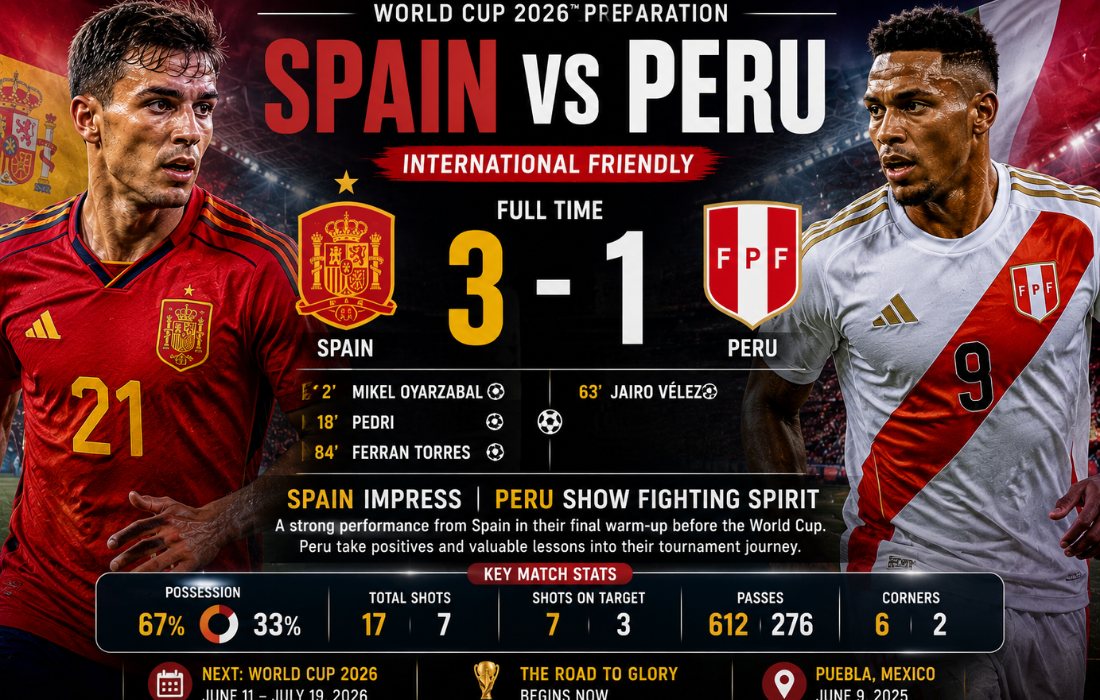
With the FIFA World Cup 2026 just around the corner. Spain and Peru headed to Puebla with very different agendas in mind.
This was the final test for Spain to get their tactics just right, build up some momentum, and figure out their starting line-up before being touted as one of the top contenders going into the tournament. For Peru, it was about measuring up against one of the top sides in the world and taking stock of where they need to improve.
The match ended with a 3-1 win for Spain, but don’t be fooled; the most important takeaways went way beyond the final score. Mikel Oyarzabal, Pedri and Spain’s attacking unit gave some solid reassurance, while Peru showed a massive amount of heart against a side packing some serious technical firepower.
Why This Friendly Match Matters Before World Cup 2026?
Friendly matches before major tournaments aren’t just a formality. They can actually give you a lot more insight than many of the competitive matches.
Managers use these games to:
- Assess player fitness
- Refine tactical systems
- Test squad depth
- Evaluate partnerships
- Build confidence before the tournament
Spain went into the match off the back of a draw against Egypt and Iraq, so this was it for them – their last chance to get their act together before kicking off the World Cup. Peru, on the other hand, were keen to use this game to see how they stack up against the best of the best.
Spain’s Possession Game Continues to Impress
One of the really interesting things to come out of the match was Spain’s ability to dominate possession and dictate the flow of the game.
Control Through Midfield
Spain’s midfield is the engine room of their team, and they’re still looking pretty strong.
Players like Pedri, Rodri, and the rest of the squad are consistently building passing triangles, maintaining possession even under pressure, and controlling the pace of the game.
Against Peru, Spain controlled a lot of the match through their movement and quick passing. Their midfield’s ability to move opponents out of position is definitely one of their greatest strengths going into the World Cup.
Creating Chances Against Organized Defenses
Having possession is one thing, but actually turning it into goalscoring chances is another.
The good news for Spain is that they’re actually really good at this.
Oyarzabal got the scoring started after just two minutes, and Pedri added a second after a nice move involving Ferran Torres. Spain found space between Peru’s defensive lines and created opportunities from wide areas and central combinations over and over again.
Areas Spain Still Need to Improve
Despite the convincing performance, Spain’s coaching staff will still be looking for ways to improve.
There were several times when Peru got themselves into some good positions and were able to have a go at the Spanish goal, and Spain did occasionally switch off after going in front.
Tournament football can be pretty unforgiving, especially in the knockout stages.
Peru Showed Signs of Progress Despite the Result
The scoreline might make it look like a one-sided contest, but Peru actually showed some really positive things.
Defensive Organization and Discipline
Facing a team as technically gifted as Spain is one of the toughest things to do in football.
Peru spent most of the match defending, but they did a pretty good job of keeping a shape and making it really hard for Spain to get into any kind of rhythm.
Although Spain eventually broke through multiple times, Peru’s defensive shape prevented the match from becoming significantly more one-sided.
Counterattacking Threats
Peru’s most promising moments came when they transitioned quickly from defence into attack.
They were able to exploit some space behind Spain’s advancing full-backs and created a few half-chances, and showed a tactical approach that could be effective against different opponents.
Character and Competitive Spirit
One positive for Peru was their response after falling behind.
Rather than allowing the match to drift away completely, they continued competing and eventually found a goal through Jairo Velez, providing a reward for their persistence.
Players Who Strengthened Their Case Before the Tournament
Individual performances often shape tournament selections and confidence.
Mikel Oyarzabal Continues His Strong Form
Oyarzabal once again demonstrated why he remains an important figure for Spain.
His early goal set the tone for the match, and his movement constantly caused problems for Peru’s defence.
The forward has been enjoying an impressive run of form and appears ready for the challenges ahead.
Pedri Looks Ready for a Major Tournament
Pedri’s influence extended far beyond his goal.
The midfielder controlled phases of play, linked attack and midfield effectively, and showed the composure that has made him one of the world’s most highly regarded young players.
His performance will give Spain confidence as they prepare for the group stage.
Peru’s Standout Performers
For Peru, Jairo Velez’s goal provided a memorable moment.
Goalkeeper Pedro Gallese experienced a difficult evening due to the own goal, but his broader international experience remains valuable for Peru’s future projects.
Tactical Insights From Both Teams
Friendly matches often reveal tactical intentions for upcoming competitions.
Spain’s Attacking Structure
Spain relied heavily on:
- Quick combinations
- Positional rotations
- Overlapping wide players
- Midfield control
- Aggressive pressing after losing possession
These principles have become central to Luis de la Fuente’s approach and were clearly visible throughout the match.
Peru’s Defensive Setup
Peru generally defended in compact lines and looked to break quickly when possession was regained.
While they spent considerable time without the ball, they demonstrated discipline and organization against superior opposition.
What the Result Means Ahead of World Cup 2026
Results in warm-up matches should never be overvalued, but they can influence confidence.
For Spain, the victory provides momentum before their opening World Cup fixture. The team leaves Puebla with attacking rhythm, key players in form, and no major injury concerns.
For Peru, the match serves as a learning opportunity. Competing against one of the tournament favourites highlighted both strengths and weaknesses that can guide future development.
Strengths Each Team Can Build On
Spain
- Midfield control
- Attacking creativity
- Squad depth
- Tournament experience
- Tactical flexibility
Peru
- Competitive mentality
- Defensive organization
- Counterattacking potential
- Emerging attacking options
Concerns Both Managers Will Address
No team enters a major tournament without questions.
Spain will continue focusing on defensive concentration and efficiency in front of goal, while Peru will seek greater consistency against elite opposition.
These areas often become decisive when margins are extremely small.
Key Takeaways From Spain vs Peru
At the end of the day, the final score – 3-1 to Spain – may tell you all you need to know, but the bigger picture is about how they’re preparing for the World Cup.
Spain demonstrated why many consider them genuine contenders for the World Cup 2026; their midfield is still one of the strongest around, and players like Oyarzabal and Pedri will be more than ready for the big stage.
Peru might have taken a beating, but they showed some real determination and spirit, and they picked up some valuable lessons taking on one of the world’s top teams.
In the end, though, both sides leave with more answers than questions. Spain can now focus fully on the World Cup, and Peru have got some useful experience under their belt which they can use to make progress in international football.