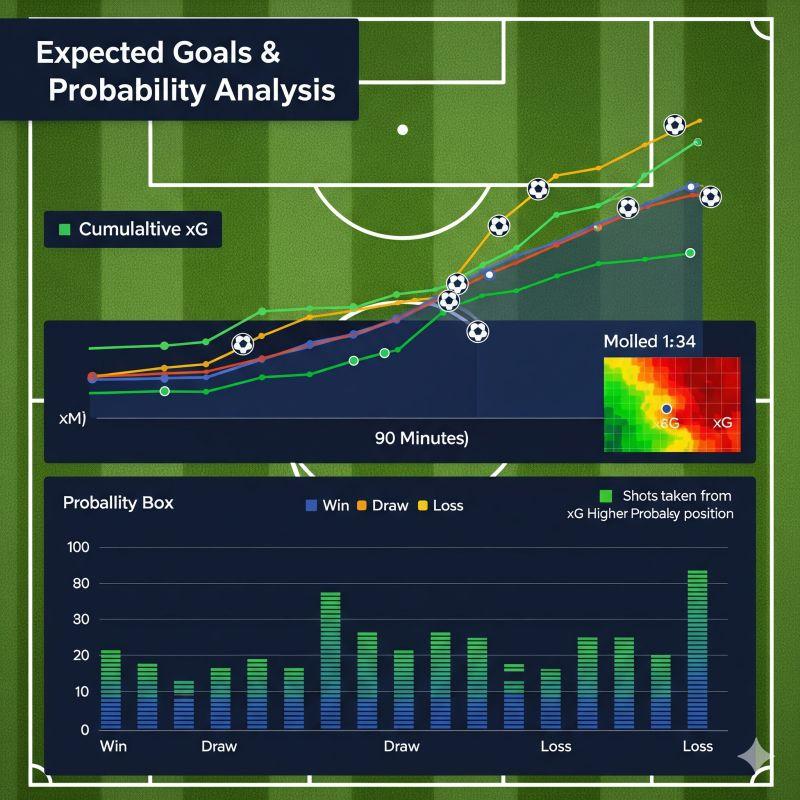
Predicting the exact score of a football match is one of the most searched and misunderstood topics in sports. Many users look for “how to predict the correct score in soccer,” expecting a shortcut or fixed formula. In reality, correct score prediction is not about guessing; it is about structured analysis, probability, and pattern recognition.
Football is a low-scoring and highly dynamic sport. A single event, a red card, a penalty, or a tactical change, can completely shift the outcome. That is why most casual predictions fail.
However, with the right approach, you can significantly improve your ability to estimate realistic scorelines such as 1–0, 2–1, or 1–1.
This guide breaks down how to predict the correct score step by step, using practical logic, statistical thinking, and real match insights.
Correct score prediction means forecasting the exact final result of a match, not just the winner.
To make a reliable prediction, you must evaluate multiple layers of data — not just surface-level results.
Recent form is one of the strongest indicators of future outcomes.
Form reveals current performance level, not historical reputation.
Football teams perform differently at home and away.
This factor alone can significantly refine your prediction.
Past meetings between teams can show consistent trends.
This is the foundation of correct score prediction.
This comparison helps you estimate expected goals range
Missing players can drastically change outcomes.
Always check lineups before finalizing predictions.
This is a practical, repeatable system.
Use simple averages:
➡ Expected goals for Team A: 1–2 goals
Repeat for both teams.
This is where most predictions fail — understanding the nature of the match.
Low-scoring matches are easier to predict and offer more consistency.
Likely outcomes:
Result: fewer goals, predictable scorelines.
➡ Expected result: low scoring
High-scoring matches are harder but can be predicted with the right signals.
Instead of predicting one score, create a shortlist.
➡ Final shortlist:
This improves success probability.
Platforms like Score9ja help you analyze:
Suggested internal links:
Focus on:
Understanding common outcomes helps refine predictions.
Combine:
Never rely on a single variable.
Treat predictions as informed estimates
Predicting correct scores in football is a skill built through consistent analysis, data interpretation, and understanding of match dynamics. There is no shortcut, but there is a clear path, focusing on goal patterns, team behavior, and structured evaluation.
Over time, as you track more matches and refine your approach, your predictions become more accurate and realistic.
Use a combination of team form, goal averages, and tactical analysis to estimate realistic scorelines.
A structured approach using data, expected goals, and match context provides the best results.
No, but they significantly improve probability and reduce random guessing.
Low-scoring matches with strong defenses are generally more predictable.
They use statistical models, historical data, and tactical insights.

Tunde Adebayo is a Nigerian football writer and live match analyst with years of experience covering European football, NPFL, CAF competitions, and international tournaments. At Score9ja, he focuses on live football scores, match analysis, league standings, fixtures, player statistics, and breaking football updates for Nigerian fans.
He has contributed to football content focused on the Premier League, UEFA Champions League, NPFL, La Liga, Serie A, Saudi Pro League, and MLS. His work prioritizes fast, accurate, and fan-focused football updates designed for mobile-first audiences across Nigeria.
Tunde Adebayo is a Nigerian football writer and live match analyst with years of experience covering European football, NPFL, CAF competitions, and international tournaments. At Score9ja, he focuses on live football scores, match analysis, league standings, fixtures, player statistics, and breaking football updates for Nigerian fans. He has contributed to football content focused on the Premier League, UEFA Champions League, NPFL, La Liga, Serie A, Saudi Pro League, and MLS. His work prioritizes fast, accurate, and fan-focused football updates designed for mobile-first audiences across Nigeria.